How High Should You Hang Pictures? | Gallery Grip
On an empty wall, hang your picture so its centre sits approximately 57–60 inches from the floor. Measure to the middle of the artwork, not the top of the frame. Above furniture, use the relationship between the artwork and the furniture to guide its placement instead.
As an interior decorator, the most common mistake I see is artwork hung too high. It can make the art feel disconnected from the rest of the room. Start with these guidelines, then adjust for your artwork, furniture and how you enjoy the space.
On an Empty Wall, Start With the Centre at 57–60 Inches
When I’m hanging artwork on an empty wall, I usually follow the gallery approach: position the centre of the piece approximately 57–60 inches from the floor.
That measurement is to the middle of the artwork, not the top or bottom of the frame.
It’s an easy distinction to miss, but it makes a big difference. Measuring to the centre gives you a consistent starting point, whether you’re hanging a small photograph or a larger framed print.
How to Find the Right Position
To work out where the artwork should sit:
-
Measure the total height of the framed piece.
-
Divide that measurement in half.
-
Choose your centre height, between 57 and 60 inches from the floor.
-
Add half the frame’s height to find where its top edge should sit.
For example, if your framed artwork is 30 inches tall and you want its centre at 58 inches, the top edge will sit 73 inches from the floor.
Remember that the top of the frame and the wall hook are usually at different heights. You’ll also need to account for the position of the D-rings or the wire when marking your attachment points.
Above Furniture, Let the Furniture Guide You
When a sofa, console or another substantial piece of furniture sits close to the wall, I take a different approach.
Instead of automatically following the 57–60-inch guideline, I position the artwork in relation to the furniture. I usually aim for the bottom of the frame to sit about 4–6 inches above it.
That connection matters. Too much empty space between the furniture and the artwork can leave the art looking as though it’s floating away from the rest of the room.
Consider Width Along With Height
Height is only part of the picture. The artwork also needs to feel proportionate to what’s beneath it.
As a starting point, I like the art to span approximately two-thirds to three-quarters of the furniture’s width. That can be one piece or the combined width of a grouping.
For example, above a 72-inch-wide console, I would generally look for artwork or an arrangement spanning roughly 48–54 inches.
These are the proportions I start with, then I step back and assess the whole arrangement. The frame, surrounding objects and available wall space all influence the final placement.
For a Gallery Wall, Treat the Arrangement as One Piece
When you’re hanging several pieces together, you don’t need to place the centre of every frame at the same height.
Instead, treat the whole ensemble as one large piece of artwork.
On an empty wall, I aim for the overall centre of the arrangement to sit approximately 57–60 inches from the floor. Individual frames can extend above and below that point.
If the gallery wall sits above furniture, I return to the relationship between the grouping and the furniture beneath it.
Planning the arrangement before making holes helps you see its overall shape, find its centre and decide where it belongs on the wall.
Why Hanging Art Too High Can Make a Room Feel Off
Sometimes a room has beautiful furniture, lovely artwork and a colour palette that works, yet something still feels wrong.
Before buying anything new, look at the height of the art.
I helped a neighbour with their living room, and after we repainted the walls, I made sure the artwork went back up at the right height. Previously, every piece had been hung too high.
The owners were shocked by how much more prominent the art became once we lowered it.
We hadn’t changed the artwork. Giving it the right position helped them see and appreciate it differently, while making the room feel more cohesive.
It’s one of those decorating adjustments that can have a real impact without requiring a new purchase.
When to Break the Hanging-Height Rules
Guidelines are useful, but they should leave room for your home and the way you live in it.
When the Artwork Takes Up Most of the Wall
If a piece is very large and fills most of the wall, the 57–60-inch rule may no longer make sense.
In that situation, I would centre it within the available wall space and look at the balance around it. The scale of the piece needs to guide the placement.
When You Want to Enjoy Art While Seated
A favourite picture beside a reading chair is another good reason to depart from the usual guideline.
You might deliberately hang it lower so you can admire it while sitting with a book or a cup of coffee.
That’s a choice about how you want to experience the artwork. Your home should make room for those personal moments.
Step Back Before You Decide It’s Finished
Once the artwork is up, look at it from the places where you normally spend time: the doorway, the sofa or your favourite chair.
Does it feel connected to the furniture? Can you comfortably enjoy it? Does the arrangement feel balanced within the room?
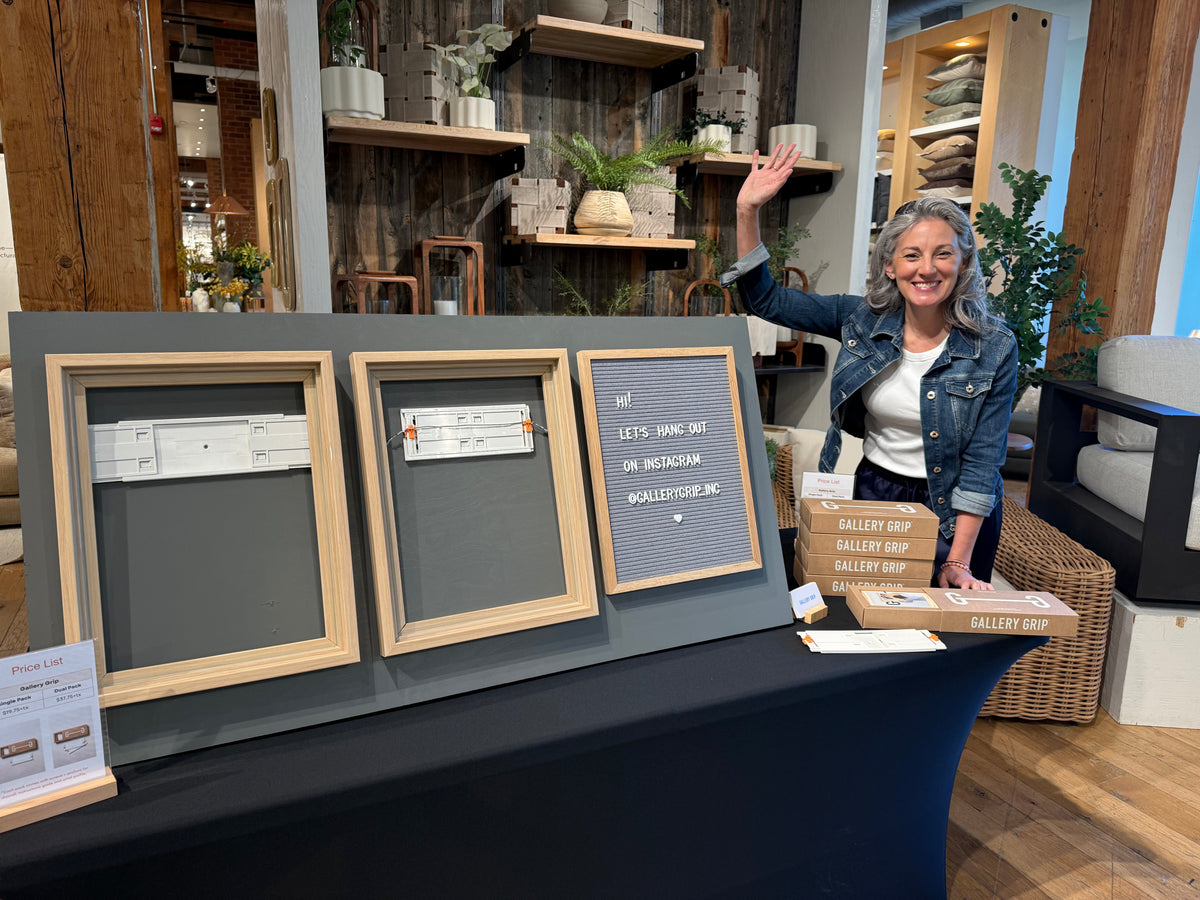
Sometimes a small adjustment makes all the difference. That’s one of the reasons I created Gallery Grip: to make it possible to fine-tune artwork horizontally and vertically after installation, without making extra holes for those adjustments.
Start with the guidelines, then trust what you see. The right height is the one that helps your artwork feel at home and lets you enjoy it every day.

Written by Melanie Courtois